
To Feed Back : A loop between body, instrument & everything in-between
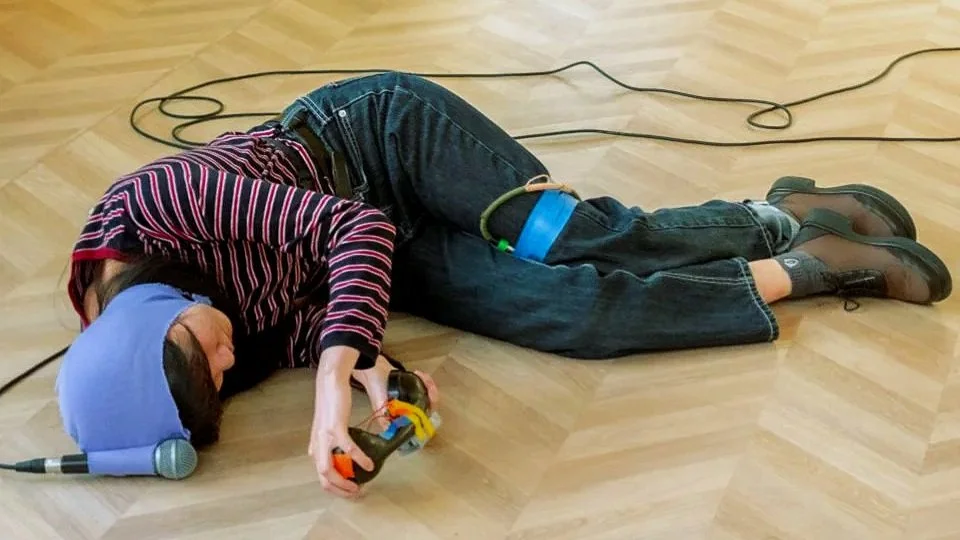
To Feed Back, performed by DuctTape & Heretical Objects (2026)
Many newly designed instruments are quite static these days. You know what to expect and can predict the outcome of your actions. This is not the case with the latest project "To Feed Back" by DuctTape Collective.
Ducttape is Nai-Syuan Ye and Polina Slavova, a research duo based in Arnhem who turn the tangled relationship between humans and machines into stories, playful interactions, and things you can actually touch.
In-between two performers, facing one another: a call. In-between the body and its second skin, a loop begins to form: a response. And again, a call.[Sound on] The playtest during Tactology Lab #3
Resembling organs from the outside, wearable instruments listen to the body, imitating its light, sound, movement & voice. The two performers, each wearing their own creature, pass a pickup coil between them, circling closer as the wires tangle, until their "organs" are forced to meet.
Then the loop locks in: imitation, call and response. Until it drifts...
The machine stops just reflecting and starts shaping the space around it, moving according to its own rhythm, until the performer can no longer predict where it goes. How close is too close, before the loop breaks and they are forced to retreat?
That's the world DuctTape Collective builds in To Feed Back, a performance born out of Tactology Lab #3, where DuctTape Collective first started working alongside Tijmen Lomeijer and Sue Kim. After the lab DuctTape evolved this into a full performance, one that has since, in collaboration with Heretical Objects, traveled with them all the way to China and Taiwan.
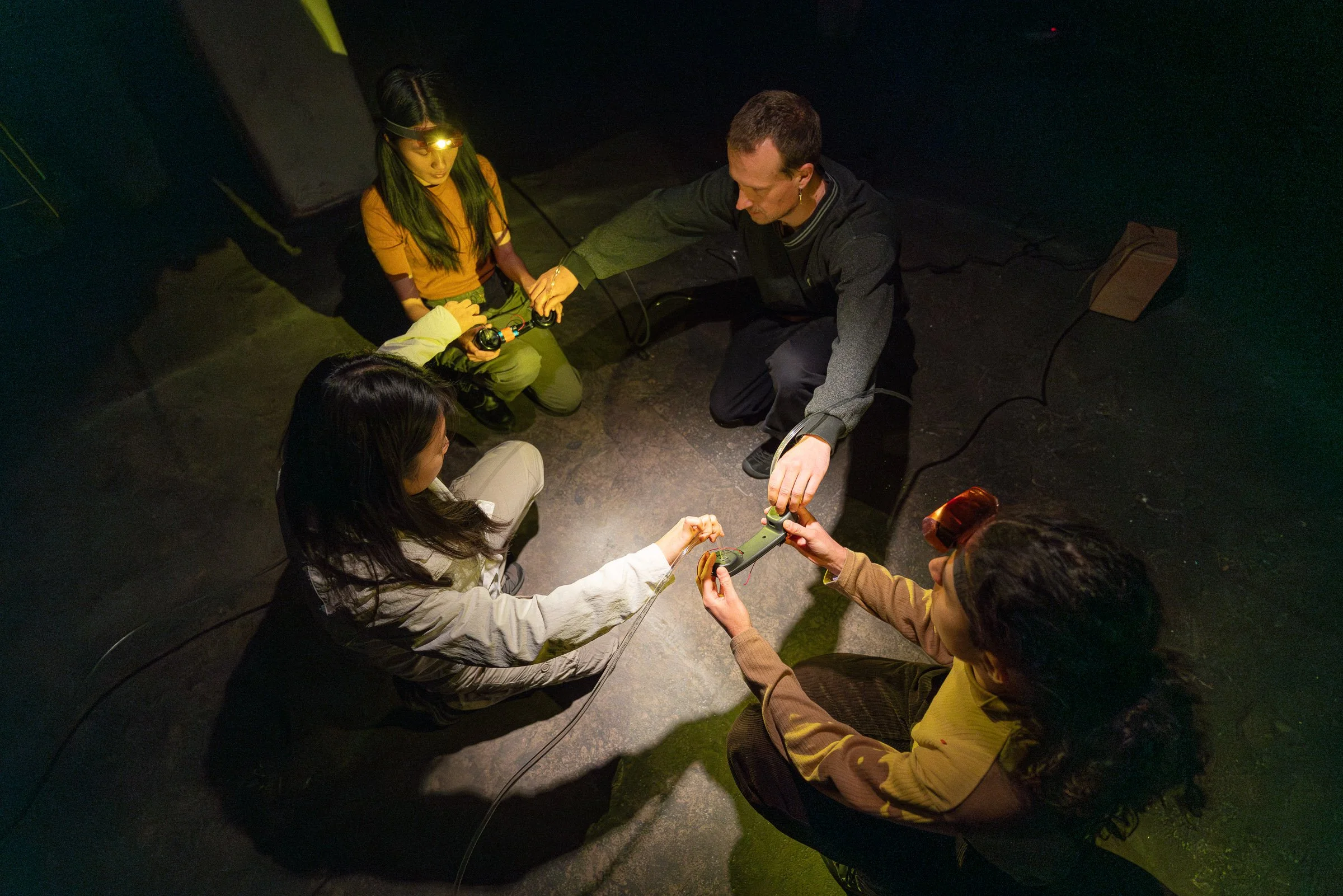
Feedback, performed by DTC, Tijmen Lomeijer and Sue Kim during Rewire Festival (2025)
A play of experimental instruments
In Tactology Lab each of the group members brought their own ideas, instruments and ways of expressing. What they shared was the same fascination with feedback itself.
In the first days of Tactology Lab, Tijmen had been building something small and strange:
"I have specifically been working on an instrument that uses tubes, with the part of the loop where the reverb is happening being in my mouth. Nothing happens when they're separated, but when you press them together, that creates a feedback loop and the sound starts rising and getting out of control.” — Tijmen Lomeijer
DuctTape Collective, working on something completely different, found the same principle waiting inside their own instruments:
“We have two experimental instruments. One is like an amplifier with tubes and a microphone and the other ones are mutated phones. Accidentally we figured out that it’s very similar to how Tijmen’s tubes work but within the phone shell. They also create a feedback loop, because the microphone inside a phone is also listening to the speaker inside the phone. So what we are also doing is shaping our hands, or squeezing the tube or the space in between the phones to create different sounds, and trying to seek this interaction between the two phones and how it changes through the shell of the phone, or when they get together. Just exploring their contact, and kind of, dialogue.”
— DuctTape Collective
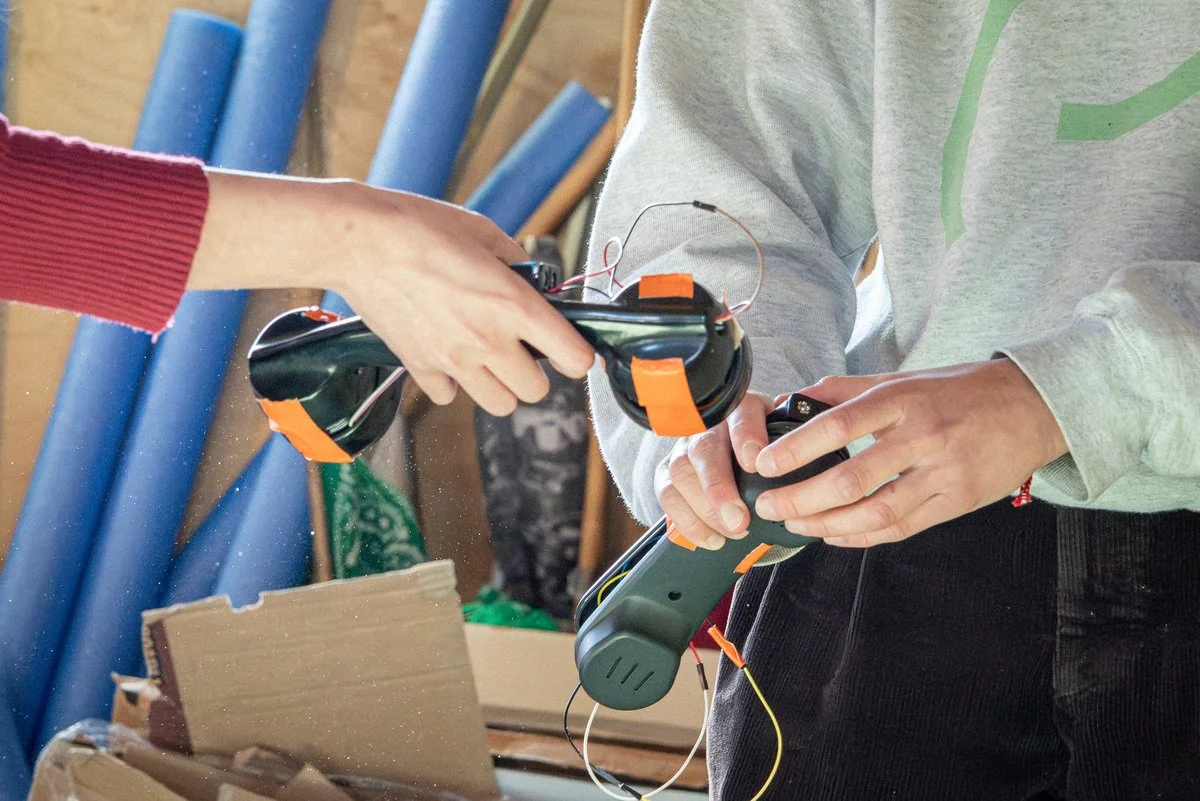
Building days during Tactology Lab
Negotiating proximity
Two instruments, built apart, reaching the same discovery: nothing happens until something closes the distance.
At its core, To Feed Back is a constant negotiation of proximity. Proximity between performers, between performer and machine - where the machine is treated as an equal (body) in an improvised choreography.
“The last part of the performance is a long hug between us. It becomes a kind of physical feedback loop: we move closer, notice whether the sound is already hurting our ears, move back, and then come closer again.”
— DuctTape Collective
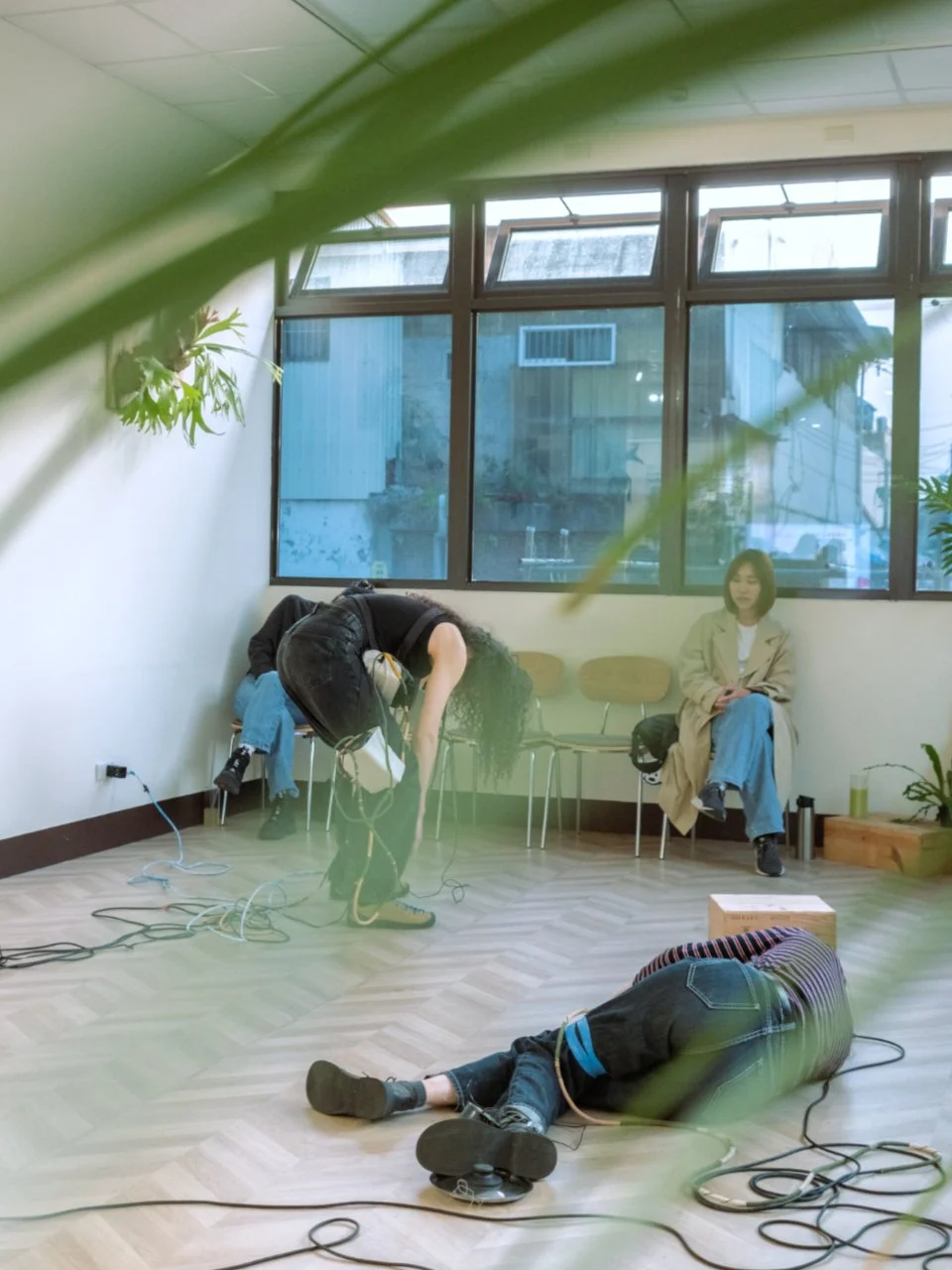
To Feed Back, performed by DuctTape & Heretical Objects (2026)
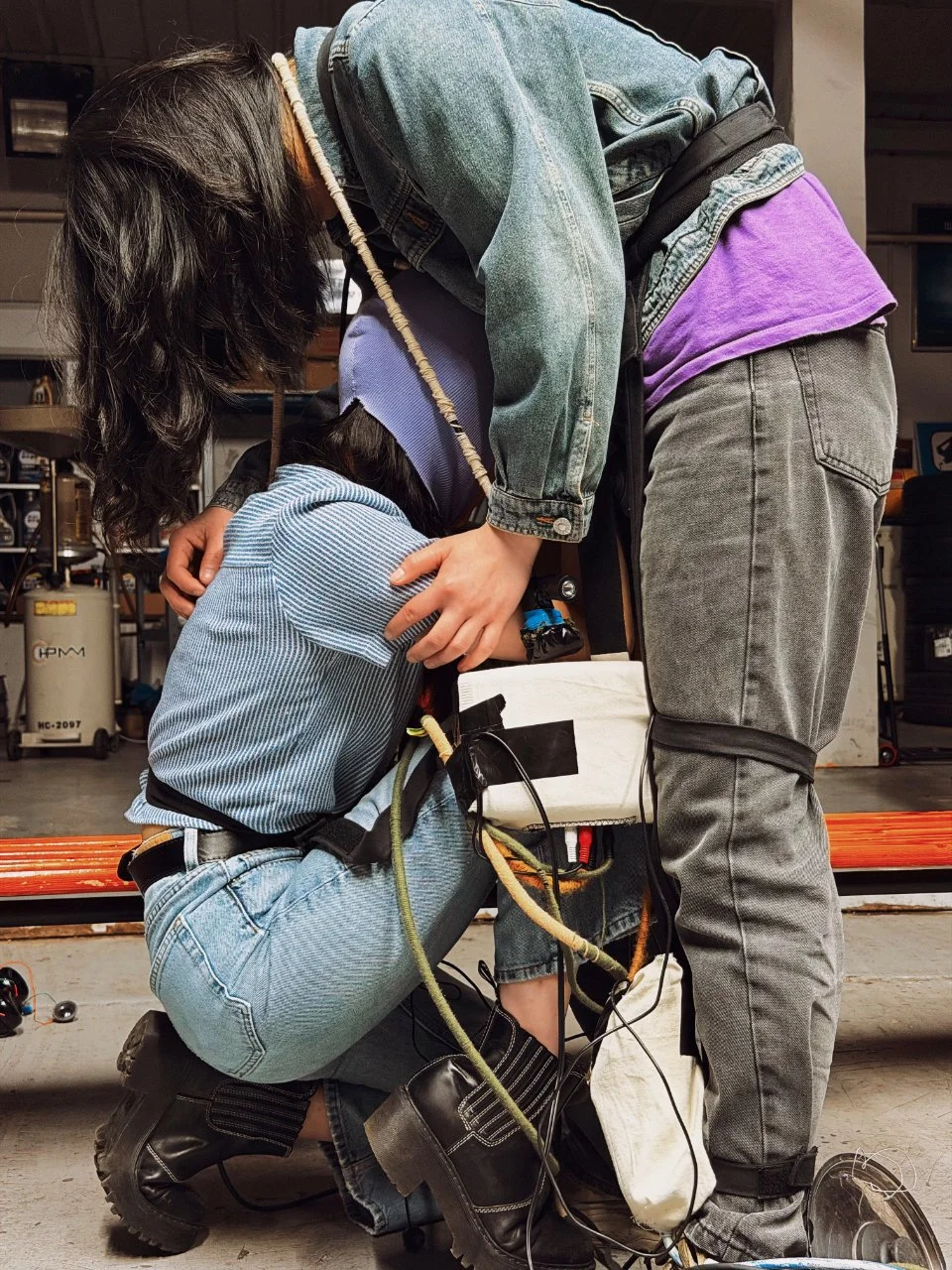
Through this negotiation, the loop deviates, raising the question : what to do once the loop takes on a life of its own?
Thijmen names the problem plainly:
"An echoing sound is very unpredictable, as in it can really get out of control. Which makes it very organic but also very uncontrollable, and we are basically trying to tame that sound." — Tijmen Lomeijer
[Sound on] Experimenting during Tactology Lab #3
DuctTape Collective's answer isn't quite an answer, it's a different question:
"Can we even maybe embrace the sound that might be scary or unfamiliar?" — DuctTape Collective
Technical challenges
But there are also technical limitations. The speaker feedback loop can potentially damage the speaker, so there is a constant need to negotiate between producing feedback and protecting the equipment. During their last performances in China, even though one of them was carefully controlling the volume, the speaker sometimes activated its protection mechanism, resulting in a sudden cut-off and approximately two seconds of silence.
“These unexpected interruptions also became part of our experience of performing and responding to the system.”
Tame it, or embrace it. To Feed Back doesn't settle the question so much as perform it, call after response, loop after loop.
Watch the video compilation of To Feed Back, performed by DuctTape Collective & Heretical Objects (2026)in China and Taiwan (2026)
Learn more about DTC at:
Learn more about Heretical Objects at:
https://www.instagram.com/heretical_objects/
https://www.instagram.com/matteo_g_v/
https://yuxinhu.com/
Are you interested in how bodies and instruments interact on stage and in Tactology Lab? You can explore your own ideas and test them the way this performance began. That same concentrated time is what Tactology Lab keeps offering.
Tactology Lab #5 runs February–April 2027. The open call opens mid-October - sign up for our newsletter to get a reminder.